The Model Context Protocol: How the 'HTTP of AI' Will Transform Enterprise Operations
Keith Williams
TheoForge
The Model Context Protocol: How the 'HTTP of AI' Will Transform Enterprise Operations
Executive Summary
For CTOs and technology leaders at major organizations, Model Context Protocol (MCP) represents the most significant AI integration standard since APIs transformed web services. This emerging protocol creates a standardized framework for AI systems to interact with real-world tools, data, and services—effectively functioning as the "HTTP of AI" that will unlock enterprise AI capabilities at unprecedented scale.
This executive briefing outlines the strategic implications and potential competitive advantages this technology offers to enterprise leaders planning their AI roadmaps.
Beyond Isolated AI: The Enterprise Integration Challenge
The greatest barrier to AI's business impact hasn't been the AI models themselves—it's been connecting those models to enterprise systems, data sources, and business processes. Despite significant investments in AI capabilities, large organizations face persistent challenges:
- Siloed AI Systems: Advanced AI models trapped in isolated environments without access to critical business data and tools
- Implementation Complexity: Custom integration requiring extensive engineering resources for each AI use case
- Governance Gaps: Inconsistent security, permissions, and auditing frameworks across AI implementations
- Return on AI Investment: Difficulty scaling successful pilots to enterprise-wide deployments
The Model Context Protocol (MCP) directly addresses these challenges by establishing a universal communication standard between AI systems and the business ecosystem they need to access.
What Enterprise Leaders Need to Know About MCP
At its core, MCP functions as a standardized "connector" enabling AI models to interact with:
- Enterprise Data Sources: Real-time access to databases, data warehouses, and knowledge repositories
- Business Systems: Direct integration with CRM, ERP, supply chain, and other operational systems
- APIs and Services: Seamless connectivity to internal and external service endpoints
- IoT and Edge Devices: Bidirectional communication with physical systems and sensors
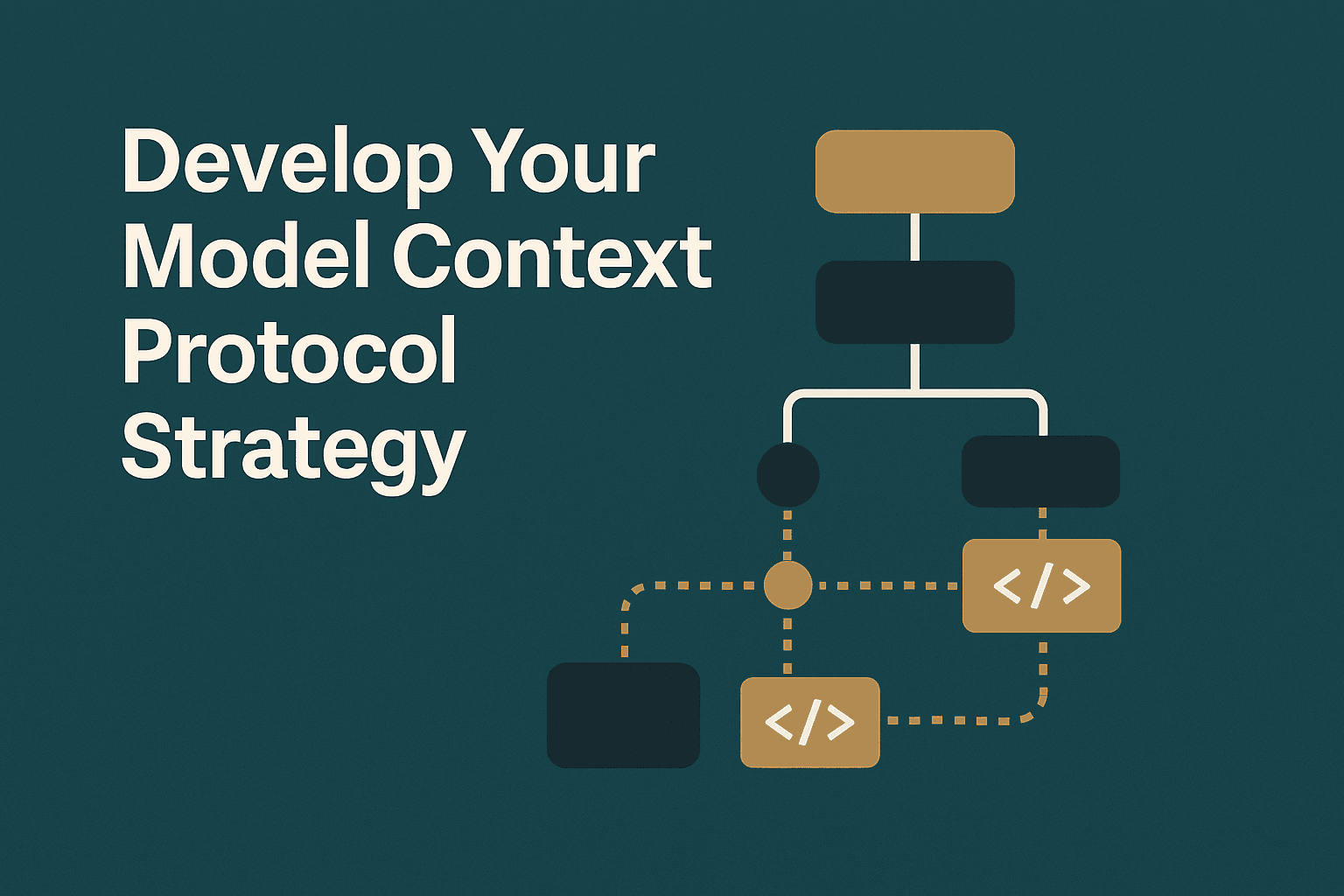
This connectivity happens through a structured framework with four key components:
- MCP Host: The AI model requesting information or actions
- MCP Client: The intermediary service managing requests and responses
- MCP Server: Lightweight applications exposing specific business capabilities
- Backend Systems: Your existing enterprise architecture and data landscape
The result is a foundation for AI that can safely and securely operate across organizational boundaries with full governance and control.
Strategic Business Implications for Enterprise Organizations
For business leaders, MCP's significance extends far beyond technical architecture—it fundamentally transforms what's possible with AI across your organization:
1. Unlocking Enterprise-Wide AI Capabilities
MCP enables AI systems to interact with your business in ways previously requiring massive custom development:
- Cross-System Intelligence: AI that works across organizational silos, connecting insights from marketing, operations, finance, and supply chain
- Real-World Actions: AI systems that don't just analyze but can execute transactions, trigger workflows, and manage processes
- Dynamic Adaptation: AI that responds to changing business conditions by accessing real-time enterprise data
- Knowledge Utilization: AI leveraging your organization's proprietary data, documents, and intellectual property
This has the potential to transform AI from isolated point solutions to an enterprise capability that spans research, clinical, manufacturing, and commercial operations.
2. Accelerating Time-to-Value
MCP promises to significantly impact development timelines and resource requirements:
- Potential reduction in integration time for new AI capabilities
- Decrease in engineering resources required for AI deployment
- Faster deployment of AI use cases across multiple business units
What previously might take months of custom integration work could potentially be accomplished in weeks using standardized MCP connections to core systems.
3. Enabling Intelligent Products and Services
Beyond internal operations, MCP creates new opportunities to embed AI capabilities directly into customer-facing products and services:
- Smart Products: Physical products that leverage AI through standardized MCP connections
- Intelligent Interfaces: Customer experiences that seamlessly integrate AI assistance
- B2B Service Enhancement: Enterprise services augmented with contextual AI capabilities
- Partner Ecosystem Integration: Extended value chains connected through secure AI interaction
4. Establishing Governance at Scale
Perhaps most critically for large organizations, MCP provides a structured governance framework for AI across the enterprise:
- Centralized Controls: Unified security, compliance, and permissioning across AI implementations
- Activity Monitoring: Comprehensive visibility into AI system actions and data access
- Regulatory Compliance: Structured audit trails and accountability mechanisms
- Risk Management: Standardized controls for sensitive operations and data handling
MCP Implementation: A Strategic Perspective
Three principles can guide successful enterprise implementations:
1. Strategic Tool Selection
Not all enterprise systems should be MCP-enabled immediately. We recommend prioritizing:
- High-Value Data Sources: Knowledge repositories with organization-specific intelligence
- Transactional Systems: Core business platforms where AI-driven actions deliver measurable ROI
- Customer Touchpoints: Systems directly impacting customer experience and satisfaction
2. Phased Implementation Approach
Based on early MCP implementations across industries, a phased approach typically yields the best results:
- Phase 1: Foundation: Establishing MCP infrastructure with core governance controls
- Phase 2: Critical Systems: Connecting high-value, high-impact business systems
- Phase 3: AI Service Expansion: Building an enterprise-wide catalog of AI services
- Phase 4: Ecosystem Integration: Extending MCP connectivity to partners and customers
3. Organizational Readiness
Beyond technology, successful MCP implementation requires organizational preparation:
- Cross-Functional Governance: Creating joint business-IT frameworks for managing AI capabilities
- Developer Enablement: Training development teams on MCP standards and patterns
- AI-Ready Process Design: Reimagining business processes to leverage AI capabilities
- Change Management: Preparing the organization for AI-augmented operations
Case Study Framework: MCP in Action
To illustrate MCP's potential, consider how different industries might leverage this capability:
Financial Services
A financial institution could deploy MCP to enable:
- AI systems that access customer data, transaction history, and risk profiles to deliver personalized financial advice
- Intelligent process automation that spans account opening, underwriting, and customer service
- Enhanced fraud detection through real-time access to transaction patterns across multiple systems
Healthcare
A healthcare provider might implement MCP to support:
- Clinical decision support systems that safely access patient records, lab results, and treatment guidelines
- Administrative automation spanning scheduling, billing, and insurance coordination
- Remote patient monitoring through secure connections to medical devices and home health systems
Manufacturing
A manufacturing enterprise could use MCP to create:
- Predictive maintenance systems that connect to production equipment, inventory, and scheduling systems
- Supply chain optimization leveraging real-time data from suppliers, transportation, and demand forecasting
- Quality control processes enhanced with computer vision and operational data
Getting Started with MCP
For enterprise technology leaders ready to explore MCP's potential:
- Assessment: Evaluate your current AI integration challenges and opportunities
- Education: Develop internal expertise in MCP standards and capabilities
- Pilot Planning: Identify high-value, contained use cases for initial implementation
- Partner Selection: Engage with technology partners with MCP expertise
- Roadmap Development: Create a multi-year strategy for enterprise-wide adoption
Conclusion: The Strategic Imperative
For CTOs and digital leaders at major organizations, establishing an MCP strategy isn't just a technical decision—it's a fundamental business imperative that will determine your organization's ability to leverage AI's full potential across operations, customer experience, and innovation initiatives.
At TheoForge, our Technology Strategy & Leadership service helps enterprises develop comprehensive MCP strategies. Our approach focuses on practical implementation planning that aligns with your specific business objectives. Contact us to discuss how we can help your organization prepare for this transformative standard.